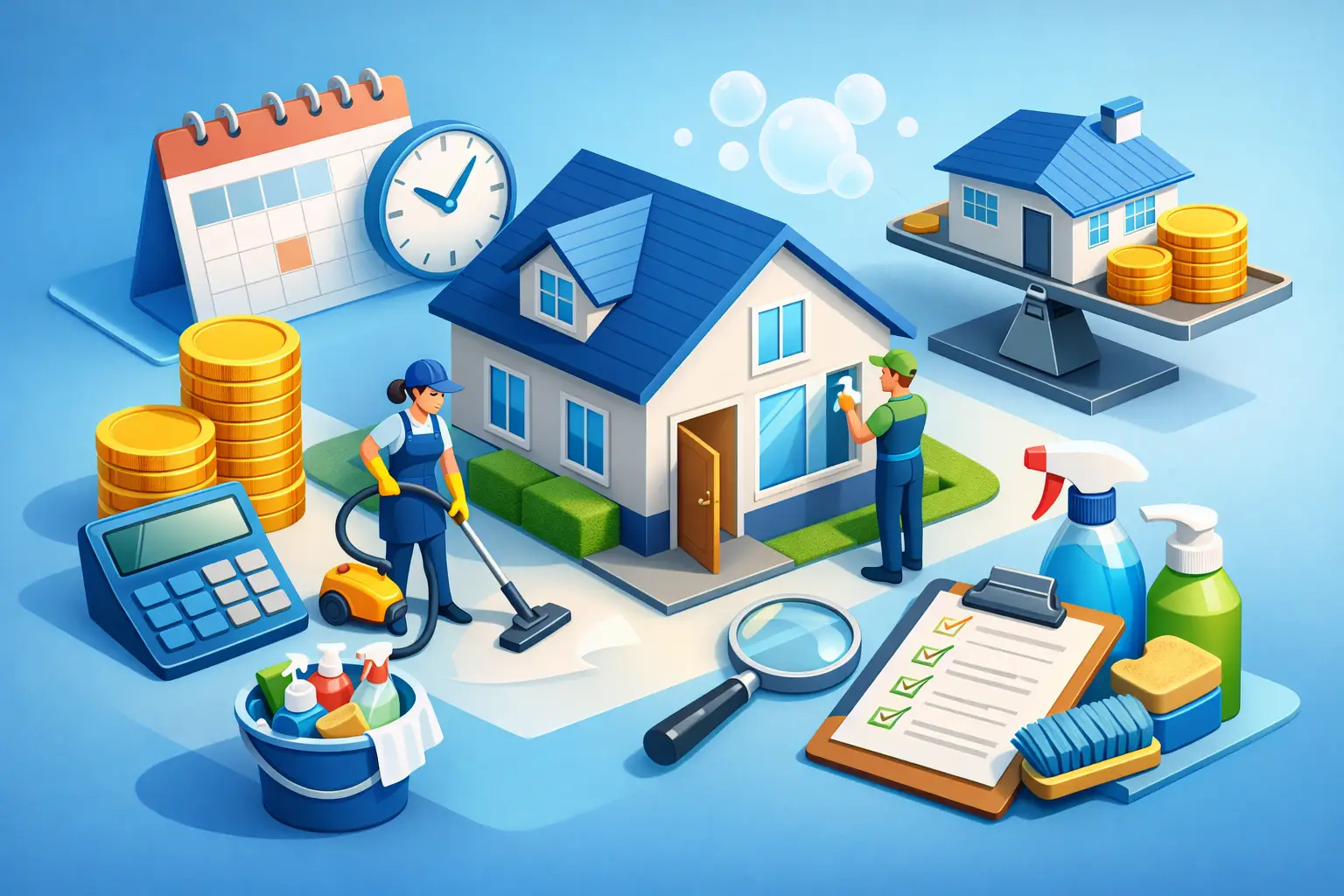
A cleaning quote can look simple at first glance, then suddenly vary by $80 or more from one company to the next. If you have ever wondered what do house cleaning services cost, the honest answer is that price depends on your home, the type of visit, and how much coordination you want handled for you.
For busy homeowners, the more useful question is not just what the number is, but what that number includes. A lower rate may cover only basic surface cleaning. A higher one may include better scheduling reliability, insured professionals, easier rescheduling, and a smoother overall experience. That difference matters when you are trying to protect your time, not create another household task to manage.
What do house cleaning services cost on average?
In most US markets, standard house cleaning services often fall somewhere between $120 and $300 per visit for an average-sized home. Smaller apartments may cost less, while larger homes or homes needing more detailed attention can move well beyond that range.
Some companies price by the hour, and others price by the job. Hourly rates commonly land between $25 and $60 per cleaner, but that number alone does not tell you much unless you know how many cleaners are coming and what is included in the appointment. Flat-rate pricing is often easier for homeowners because it provides clarity upfront and reduces surprises.
A routine cleaning for a two-bedroom home may sit near the lower to middle end of the range. A first-time clean for a larger house with multiple bathrooms, pets, and visible buildup will usually cost more. Deep cleaning, move-in cleaning, and move-out cleaning are typically priced above recurring maintenance visits because they require more time and more detailed work.
Why prices vary more than most people expect
House cleaning is not a one-size-fits-all service. Two homes with the same square footage can price very differently based on layout, frequency, and condition.
The first major factor is home size. More bedrooms, more bathrooms, and more livable square footage generally mean more surfaces, more floors, and more time. Bathrooms and kitchens also carry more cleaning intensity than living rooms or hallways, so a three-bathroom home may cost noticeably more than a home with the same footprint but fewer wet areas.
The second factor is the home’s starting condition. If a space has been professionally maintained every two weeks, a team can usually work efficiently. If it has gone several months without service, there may be soap scum, grease, dust buildup, and heavier floor work involved. That is why many companies recommend an initial deep clean before moving a customer into recurring service.
Frequency matters too. Weekly service is usually the most cost-effective on a per-visit basis because the home stays in better shape between appointments. Biweekly service is also common and often offers a good balance of maintenance and value. Monthly service tends to cost more per visit because more accumulates between cleanings.
There is also a service model difference that many homeowners overlook. A company with structured scheduling, customer support, digital confirmations, and managed operations may charge differently than an independent cleaner working entirely by text message. That added organization can translate into fewer missed appointments, better communication, and less friction when plans change.
Standard cleaning vs. deep cleaning
This is one of the biggest price drivers. Standard cleaning is usually designed to maintain a reasonably tidy home. It often includes vacuuming, mopping, dusting, bathroom cleaning, kitchen surface cleaning, and general straightening of service areas.
Deep cleaning goes further. It often targets buildup in places that do not get fully addressed during maintenance appointments, such as baseboards, detailed bathroom scrubbing, heavier kitchen cleaning, and more attention to fixtures, edges, and high-touch areas. Because it is more labor-intensive, it can cost significantly more than a recurring standard clean.
For many households, deep cleaning is best treated as a reset. Once the home is brought to a consistent baseline, recurring service becomes simpler and more predictable in cost.
Pricing methods you will see
Some cleaners use hourly pricing because it gives flexibility when a home’s condition is uncertain. That can work well for highly customized visits, but it can also make the final bill less predictable.
Flat-rate pricing is popular with homeowners who want clarity. You know the expected cost before the visit, and the company is responsible for scoping the work properly. This approach usually fits households that want an elegant, low-friction booking experience.
You may also see pricing based on bedroom and bathroom count rather than exact square footage. That method is common because those room counts are easy to verify and often correlate well with cleaning time. It is not perfect, but it is practical.
What is usually included in the price
A typical recurring house cleaning quote often includes dusting accessible surfaces, vacuuming carpets and rugs, mopping hard floors, wiping kitchen counters, cleaning the exterior of appliances, sanitizing sinks, cleaning showers and tubs, scrubbing toilets, and tidying general living areas.
What is not included is just as important. Laundry, dishes, interior oven cleaning, interior refrigerator cleaning, blind detailing, inside windows, wall washing, and heavy decluttering may be extra or excluded entirely. If you want those tasks handled, ask in advance. Clear scope leads to better results and fewer surprises on cleaning day.
Add-ons that can change the total cost
Extra services can move your quote up quickly, especially if they involve detail work or appliance interiors. Interior fridge and oven cleaning, folding laundry, bed changes, post-party cleanup, and interior window cleaning are common examples.
Pet hair is another factor. Many homeowners have pets, and most cleaning professionals are happy to work around them, but homes with significant shedding may require additional vacuuming and upholstery attention. If your household includes dogs or cats, it is worth mentioning during booking so the quote reflects the actual work.
Special access conditions can matter too. Parking challenges, elevator buildings, large multi-story layouts, or homes with delicate finishes may affect time and pricing.
How often should you schedule cleaning?
The right frequency depends on your household rhythm. Weekly service makes sense for families with children, pets, frequent cooking, or packed schedules. Biweekly service is often the most popular choice because it keeps the home consistently presentable without feeling excessive.
Monthly service can work for smaller households or lighter-use homes, but it usually requires more upkeep between visits. If your real goal is peace of mind, not just occasional help, more frequent service usually creates a better experience.
There is also a cost-efficiency trade-off here. Paying a little more overall for regular service can reduce the need for repeated deep cleans and help preserve the home’s condition over time.
How to compare quotes without guessing
When comparing providers, focus on more than the starting number. Ask whether supplies are included, whether the service is insured, whether arrival windows are clear, and how easy it is to reschedule or manage appointments. Those operational details shape the experience as much as the cleaning itself.
It also helps to understand whether the quote is customized to your home or based on a generic estimate. A well-scoped quote is more reliable. If a company asks thoughtful questions about layout, bathrooms, pets, service history, and priorities, that is usually a good sign.
For homeowners who value convenience, the booking process matters. A polished digital experience, appointment confirmations, and simple account management may not appear as a line item on the quote, but they save time and reduce stress. That is part of the service value.
What do house cleaning services cost if you want premium reliability?
If you are paying for dependable scheduling, consistent standards, responsive support, and a more refined customer experience, expect pricing to reflect that. You are not only hiring someone to wipe surfaces. You are paying for a service system that keeps your household running with less effort on your part.
That does not always mean the highest quote is the best one. It means the cheapest quote is not automatically the best value. If you need recurring support that feels organized and easy to manage, reliability has real worth.
A modern service brand like Sparkly Squad is built around that idea. The cleaning itself matters, of course, but so does the ability to book, confirm, and manage appointments without adding another layer of household admin.
A practical budget range to expect
If you want a simple planning number, many homeowners should expect roughly $120 to $200 for a smaller or moderately sized routine clean, $180 to $300 for a larger or more involved recurring visit, and more for deep cleaning or specialty requests. In high-cost metro areas, rates may run above those ranges.
The clearest path is to think in terms of your own home rather than national averages. Size, bathrooms, pets, and frequency will shape the quote more accurately than any broad pricing chart.
If you are evaluating service for the first time, start by deciding what you want most: the lowest possible cost, the deepest level of detail, or the smoothest ongoing experience. The right choice is usually the one that gives you a clean home and gives you your time back.