You have a sink full of breakfast dishes, laundry waiting to be folded, and a weekend that is already booked. That is when the distinction between housekeeping versus maid service becomes more than a wording question. You are not simply hiring someone to clean. You are deciding what kind of support will make your home feel easier to manage.
The terms are often used interchangeably, and providers do not always define them the same way. The better question is not which label sounds right. It is which tasks, schedule, and service structure fit the way your household actually runs.
What housekeeping usually includes
Housekeeping generally describes broader, ongoing home support. Cleaning is part of the role, but it may sit alongside routine tasks that help keep the household in order. Depending on the arrangement, a housekeeper may make beds, change linens, manage laundry, wash and put away dishes, organize common areas, or restock basic household supplies.
This type of support is often best for homes that need regular attention between deeper cleanings. A family with young children, a household with frequent guests, or a professional who travels often may value someone who can keep daily details from building up.
Traditionally, a housekeeper may work in one home on a recurring schedule and become familiar with its routines. That continuity can be especially useful when the work includes preferences beyond cleaning, such as where folded clothes belong or how bedrooms should be prepared. It also means the scope should be clearly defined from the start. Housekeeping can become open-ended quickly if daily chores, organizing, and cleaning are never separated into agreed responsibilities.
What maid service usually includes
Maid service more commonly refers to a professional cleaning appointment. Many modern companies use the term residential cleaning service instead, but the expected work is usually similar: cleaning kitchens and bathrooms, dusting surfaces, vacuuming and mopping floors, removing trash, and tidying the areas included in the booking.
Appointments may be weekly, every two weeks, monthly, or occasional. A service can also be designed as a one-time deep cleaning before a move, after hosting guests, or when a home needs a fresh starting point.
Maid service is typically task-based rather than household-management-based. The team arrives with a defined cleaning plan, completes the work within the scheduled visit, and leaves you with a cleaner space. Laundry, extensive organizing, meal preparation, pet care, and errands are not usually included unless a provider specifically offers them.
The wording can feel old-fashioned to some homeowners, and it does not always indicate the quality or scope of service. What matters is the service checklist. One company’s maid service may include bed making and dishes, while another limits visits to core cleaning tasks. Never assume the label tells the whole story.
Housekeeping versus maid service: the practical difference
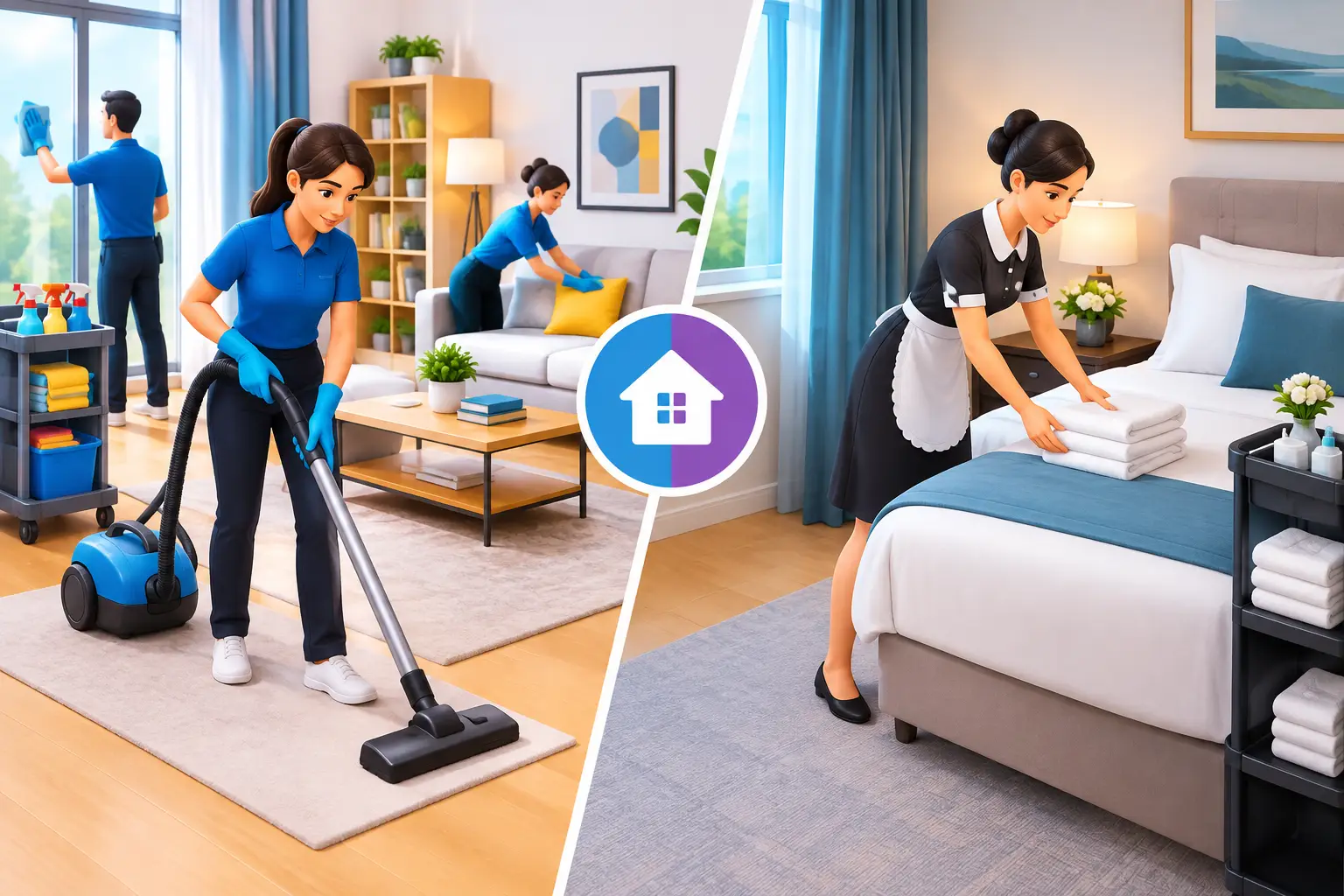
The simplest distinction is this: housekeeping helps maintain the flow of a home, while maid service focuses on cleaning it. There is overlap, but the intent is different.
A housekeeper may spend time folding laundry after cleaning the bathroom because both tasks support an orderly household. A cleaning professional may leave the laundry untouched, even if it is visible, because the appointment is structured around sanitation and surface care.
Service structure is another difference. Housekeeping may involve longer visits, a dedicated individual, and an arrangement that evolves around your family’s routines. Maid service is often easier to book as a defined recurring or one-time appointment, with the provider coordinating schedules, service details, and customer communication.
Neither option is automatically more thorough. A recurring cleaning service can deliver meticulous kitchen and bathroom care. A housekeeper can provide excellent cleaning as part of a broader role. The right fit depends on whether your biggest pressure point is cleaning itself or the accumulation of small household tasks around it.
Choose based on the problem you want solved
Start by noticing what creates friction at home during a typical week. If floors, bathrooms, dust, and kitchen buildup are the main concerns, a recurring cleaning service is usually the direct answer. A weekly or biweekly schedule keeps foundational cleaning from taking over your evenings.
If the house is reasonably clean but life still feels disorganized because beds are unmade, laundry piles up, and common spaces never stay reset, housekeeping may be a better match. This is particularly true when you want support that adapts to a household rhythm rather than a fixed cleaning checklist.
A blended approach can work well, too. Some homeowners use a recurring cleaning service for the detailed work, then handle light resets themselves. Others arrange housekeeping support for everyday upkeep and add a deep cleaning when seasonal tasks need more attention.
Before you book, write down the work you want completed over the next month, not just the tasks you notice on a stressful day. Look for patterns. A clear list will help you select the right service and set expectations without guesswork.
- How often do bathrooms, floors, and the kitchen need professional cleaning?
- Do you need laundry, linens, dishes, or organization included?
- Are there rooms, materials, or household items that require special care?
- Do you prefer a consistent individual or the flexibility of a managed cleaning team?
- Is your priority ongoing maintenance, a reset after a busy period, or both?
Ask for scope, not assumptions
Clear communication protects both your time and your home. When comparing providers, ask what is included in a standard visit, what qualifies as an add-on, and what requires a separate deep cleaning appointment. It is also wise to confirm whether supplies and equipment are provided, how long the visit is expected to take, and how changes or access instructions are handled.
For housekeeping arrangements, discuss priorities in order. If there is not enough time to complete every task, should the housekeeper focus on the kitchen, laundry, bedrooms, or another area first? A practical priority list prevents disappointment and gives the visit a useful structure.
For maid service, pay close attention to operational details. Reliable scheduling, advance confirmations, simple booking management, and a clear way to update instructions can matter as much as the cleaning itself. A polished service experience reduces the administrative work that often makes outsourcing feel less convenient than it should.
Sparkly Squad is designed around that kind of organized customer flow, helping homeowners schedule and manage residential cleaning without the back-and-forth that can complicate routine home care.
Set up your service for better results
The most successful recurring arrangements are specific but realistic. Let your provider know about pets, fragile items, surfaces that need special products, rooms that are off-limits, and any areas that deserve extra attention. If you prefer a certain order of work or have access instructions, share those details before the appointment rather than trying to communicate them at the door.
It also helps to keep expectations aligned with the service type. A cleaning visit can restore a home beautifully, but it may not resolve years of clutter or complete a full household reset in one appointment. Likewise, a housekeeper can maintain day-to-day order, but deep cleaning tasks may need dedicated time.
Your home support should feel like a relief, not another system to manage. Choose the scope that removes the tasks that consistently cost you time and energy, then give it enough structure to work reliably week after week. The right arrangement creates more room for the parts of home life you actually want to enjoy.