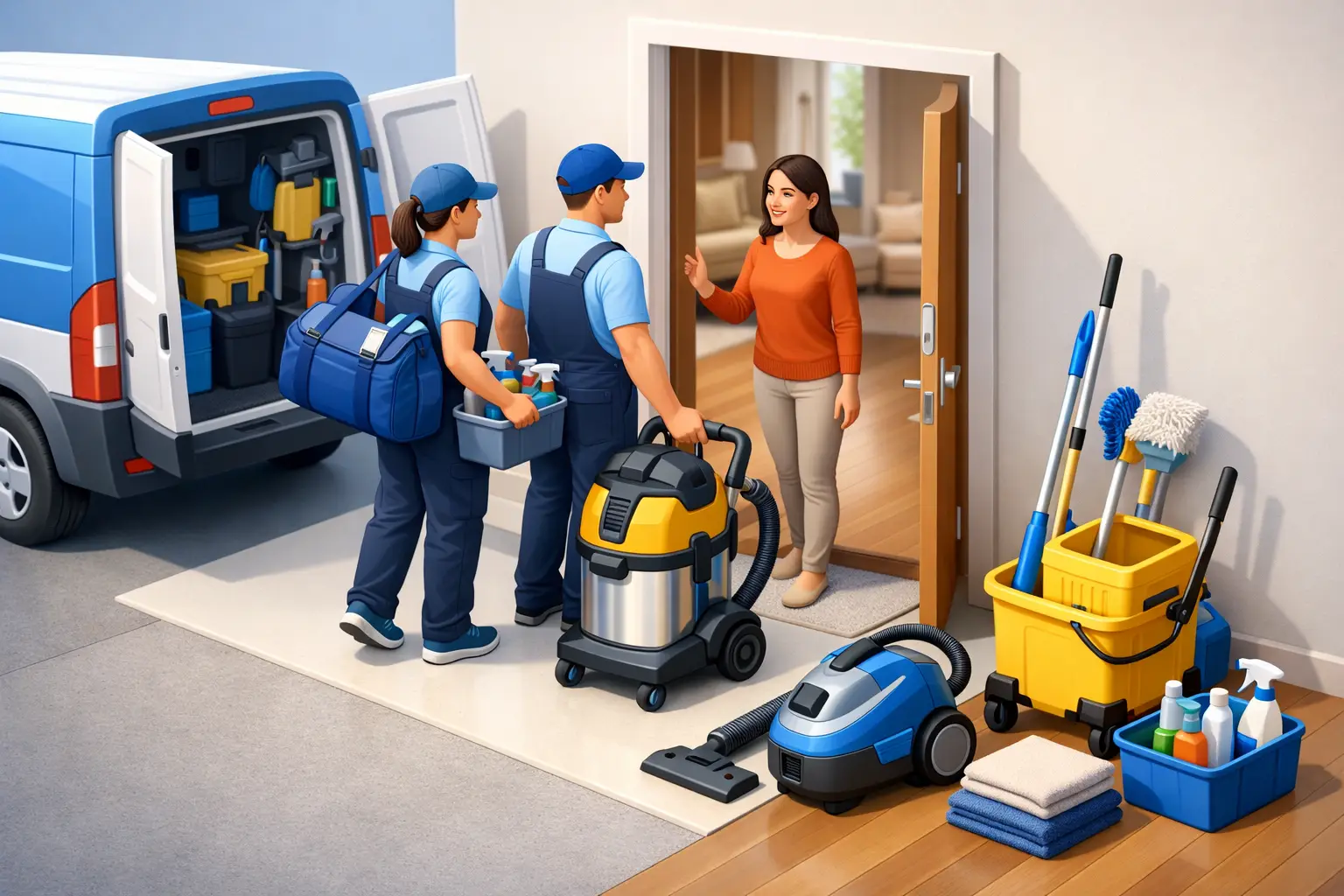
You have finally found time to schedule help at home, selected a date, and cleared your calendar. Then one practical question comes up: do cleaners bring equipment? Usually, professional residential cleaners bring the core tools and products needed to complete a standard cleaning. But the precise answer depends on the cleaning company, the service booked, and the needs of your household.
Knowing what to expect before your appointment keeps the experience simple. It also helps your cleaning team spend their time where it matters most: making your home feel refreshed, organized, and ready for the week ahead.
Do Cleaners Bring Equipment for Standard Visits?
For a typical home cleaning, a professional team will generally arrive with essential equipment such as vacuums, microfiber cloths, mops, dusters, and common cleaning solutions. These supplies support the routine work most homeowners expect, including dusting surfaces, cleaning bathrooms and kitchens, vacuuming floors, and tidying high-touch areas.
Bringing supplies is part of what makes a professional service convenient. You should not have to make a last-minute run for glass cleaner or wonder whether there is a clean mop available before your appointment. A prepared cleaner can arrive, review the scope of work, and begin promptly.
That said, “equipment included” does not always mean every product or specialty tool is available for every circumstance. A standard cleaning is designed for regular home maintenance. It may not cover unusual conditions, highly delicate materials, or intensive restoration work without advance planning.
What Equipment Is Usually Included?
Most cleaning appointments call for a dependable set of tools that can be safely transported from home to home. While each provider operates differently, standard equipment commonly includes a vacuum, mop and bucket or spray mop, microfiber towels, dusting tools, bathroom brushes, and general-purpose cleaning products.
Cleaners may also carry separate cloths or tools for kitchens, bathrooms, and other areas to support a hygienic process. This small operational detail matters. Using the same cloth across every surface is not a polished approach to home care, especially in spaces where food preparation and personal care overlap.
Many services also bring products suited to common surfaces, such as countertops, sinks, stovetops, mirrors, toilets, and sealed flooring. For routine cleaning, that is often all that is required.
When You May Need to Provide Something
There are a few situations where a homeowner may be asked to provide a product or item. This is not necessarily a sign of limited service. Often, it reflects a thoughtful approach to your home, preferences, or building requirements.
Preferred or allergy-sensitive products
If someone in your household has allergies, asthma, fragrance sensitivities, or a preference for plant-based products, you may want the cleaning team to use products you already know work well in your home. Let the company know before the visit rather than leaving instructions on the counter the day of service.
A clear note about what to use and what to avoid gives the team the information they need to clean confidently. It also reduces the chance of a product being used on a surface or around a family member who is sensitive to it.
Specialty surfaces and finishes
Natural stone, unsealed wood, antique furniture, specialty metals, and high-end appliances can require specific care. The wrong cleaner can dull a finish, leave residue, or cause damage that routine wiping cannot reverse.
For these surfaces, a professional cleaner may ask you to supply the manufacturer-recommended product. You can also share care instructions in advance. A good cleaning service will treat these details seriously rather than making assumptions.
Building rules and shared equipment
Some apartment or condominium buildings have restrictions around water access, elevator use, vacuum noise, or the storage of equipment. Others may provide shared amenities that require advance reservations. If your home has access limitations, include them in your booking notes or communicate them before the appointment.
A cleaner can bring the right tools, but access remains part of a smooth visit. Entry codes, parking instructions, elevator procedures, and pet information are just as useful as a stocked supply kit.
Specialty Services Often Require Advance Notice
Standard cleaning supplies are not designed to solve every household challenge. Deep cleaning after a renovation, removing heavy buildup from an oven, cleaning interior windows at height, shampooing carpets, or addressing mold-like staining may require specialized equipment and products.
These services can involve extra time, different tools, or a different level of expertise. Booking them as part of the original request allows the company to schedule appropriately and send a team prepared for the job. Mentioning a heavily soiled shower only after the cleaners arrive can create an awkward decision: rush through it, change the scope, or leave it for another visit.
Honesty helps here. If it has been several months since the last thorough clean, if you are preparing for a move, or if a particular room needs extra attention, say so when booking. The goal is not to judge the condition of your home. It is to match the appointment to what you actually need.
How to Confirm What Your Cleaner Will Bring
The clearest answer will always come from your cleaning provider’s service details and booking confirmation. Before your appointment, review what is included in the selected service and look for notes about supplies, add-ons, or customer-provided products.
If anything is unclear, ask a direct question: “Will the team bring a vacuum, mop, and standard cleaning products?” This is more useful than assuming that “cleaning supplies” means the same thing to every company.
You may also want to confirm whether the team can use your preferred products, whether they bring equipment for homes with pets, and whether there are restrictions for delicate floors or surfaces. A well-organized provider should make these conversations straightforward, not burdensome.
A Simple Way to Prepare Your Home
You do not need to clean before professional cleaners arrive. That would defeat the purpose. Still, a little preparation helps the appointment run on time and lets your team focus on cleaning rather than searching for access to surfaces.
Put away confidential documents, medications, valuables, and fragile items. Clear excessive clutter from floors, counters, and bathroom surfaces where possible. If you want the cleaners to skip a room, leave a concise note or communicate it through your booking details.
For pets, decide whether they will be home, crated, or in a separate room. Even friendly animals can be unsettled by unfamiliar people and the sound of a vacuum. Providing this information in advance creates a calmer experience for everyone.
It is also helpful to identify anything that needs special handling. A quick note such as “use only the stone cleaner under the sink on the marble vanity” can prevent confusion and protect the finishes you value.
Equipment Is Only Part of a Dependable Service
A vacuum and cleaning products matter, but they are not the whole experience. Reliable home cleaning also depends on clear scheduling, a defined scope of work, respectful communication, and a team that arrives ready to care for your space.
For busy households, the best service feels organized from the moment you book through the moment you return to a clean home. Equipment should be handled in the background, not become another task on your list.
Before your next appointment, take one minute to review the service details and share any product preferences or access notes. That small step helps your cleaning team arrive prepared and lets you enjoy the peace of mind you booked the service for.